






This website uses cookies to improve your experience. We'll assume you're ok with this, but you can opt-out if you wish. Read More


Something has shifted in how organisations think about performance.
For a long time, the dominant model was simple: more hours, more output, more pressure. Recovery was something that happened on weekends — if at all. Wellbeing was a personal matter, not a business one.
That model is breaking down. The evidence from organisational psychology, neuroscience and hard business experience is now difficult to ignore: sustained high performance requires recovery. Teams that never properly rest do not perform better over time — they perform worse, and eventually they stop functioning at all.

The corporate wellness retreat has emerged as one of the most effective responses to this reality. Not as a perk. Not as a reward for good behaviour. But as a deliberate, strategic investment in the human infrastructure that everything else depends on.
The term “wellness” has accumulated a lot of noise — spa days, green juices, yoga influencers. It is worth being clear about what a corporate wellness retreat actually means in a serious organisational context.
At its core, it is a retreat that prioritises recovery and restoration alongside — or instead of — intensive strategic work. The focus is on giving teams the conditions to decompress, reconnect with their own energy, and return to work with greater capacity than they left with.
This might involve structured sessions — on sleep, stress, sustainable performance, or mindful leadership. It might involve facilitated conversations about how the team is functioning and what it needs. Or it might simply involve time in nature, good food, genuine rest, and the absence of the usual pressures. Often, the most powerful element is the last: doing less, better.
Burnout has moved from a marginal concept to a recognised occupational phenomenon. The World Health Organisation classifies it as a syndrome resulting from chronic workplace stress — and the data on its prevalence across industries and seniority levels is striking.
For organisations, the cost is concrete: reduced productivity, higher absenteeism, increased turnover, and a steady erosion of the discretionary effort that high-performing teams depend on. A corporate wellness retreat is, in part, a response to these costs — a recognition that the investment in recovery pays dividends in sustained performance.
The widespread move to remote and hybrid working has blurred the boundaries between work and rest in ways that have been difficult to manage. When the office is the kitchen table, switching off becomes a cognitive act rather than a physical one — and one that many people are not successfully making.
Teams that rarely share physical space also miss the informal social recovery that office environments, at their best, provide: the conversations that are not about work, the moments of levity, the simple experience of being with other people without an agenda. A corporate wellness retreat can restore some of what distributed working has made harder to sustain.
Elite sports have understood this for decades: the training matters, but so does the rest. The physiological and psychological mechanisms of performance are the same whether the arena is sport or business — and the science of recovery applies equally.
Organisations that are serious about sustained high performance are beginning to apply this logic deliberately. A corporate wellness retreat is not a soft option. It is a high-performance strategy.
Recovery is not the absence of work. It is the condition that makes the next period of work possible.
Can Vital
The format varies considerably depending on what the team needs, who is facilitating, and how the programme has been designed. Some elements that tend to feature in effective corporate wellness retreats:
Time in nature. The evidence for the restorative effects of natural environments is substantial. Access to land, trees, open air and physical space away from screens supports the kind of parasympathetic recovery that office environments actively suppress. A setting in nature is not decorative — it is functional.
Movement. Walking, stretching, yoga, swimming — the specific form matters less than the fact of moving in ways that are chosen rather than commuted. Physical movement supports mental recovery and shifts the nervous system in ways that sitting in sessions cannot.
Genuine rest. This is the element most often underestimated, and most often cut when programmes get overloaded. Sleep, stillness, and unstructured time are not indulgences — they are the conditions under which the brain consolidates, integrates and restores.
Nourishing food. What people eat during a retreat affects how they feel and function throughout it. Locally sourced, carefully prepared food that respects the body’s needs is part of the programme — not a footnote.
Facilitated reflection. Many corporate wellness retreats include space for teams to reflect on how they are working, what is sustaining them and what is depleting them. This is not therapy — it is useful, grounded conversation about conditions and patterns that affect everyone’s performance.
A corporate wellness retreat lives or dies by its setting. The environment is not background — it is active. And the requirements are specific.
Nature access is non-negotiable. A wellness retreat in an urban hotel — however high-end — is working against itself. The restorative effects of natural settings are well-documented, and a venue without genuine nature access cannot deliver them.
Residential capacity matters. Wellness retreats require continuity — the rhythm of shared meals, early mornings, evenings without agenda. Day-trip formats miss the depth that only emerges when a group stays together across the full arc of a retreat.
Scale and intimacy. Large, busy venues with other guests, background noise and institutional energy are not conducive to the kind of restoration a corporate wellness retreat requires. Smaller, quieter spaces — where the team can feel that the environment belongs to them — work considerably better.
Can Vital does not design or run wellness programmes — the structure, the facilitators and the specific activities are always the team’s to choose.
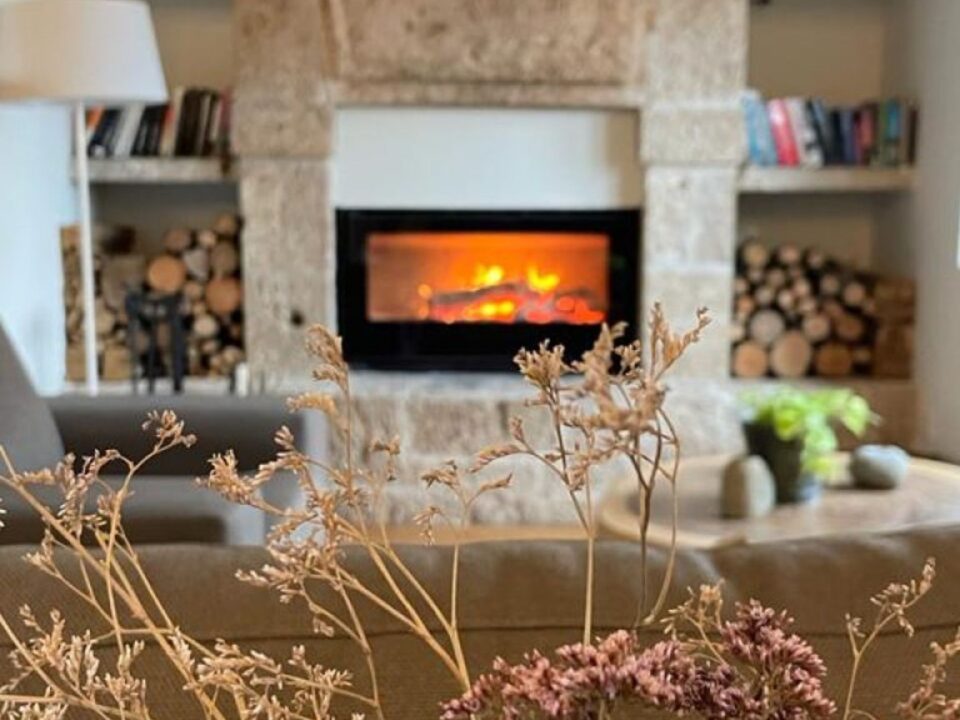
What Can Vital provides is a setting that supports recovery at every level. The property is surrounded by nature and set apart from the noise and pace of urban life. Residential accommodation keeps teams together across the full stay. Food is prepared with local produce, adapted to the group’s needs, and served in a way that treats the table as a place of restoration rather than refuelling.
The outdoor spaces — for walking, for sitting, for simply being outside — are available throughout the stay. The indoor spaces are quiet, human in scale, and designed to support both structured sessions and genuine rest.
Whatever wellness programme teams arrive with — whether led by an external practitioner, structured around a specific framework, or intentionally loose — Can Vital provides the conditions for it to work.
This website uses cookies to improve your experience. We'll assume you're ok with this, but you can opt-out if you wish. Read More
Preferences